Content Planning
How Can You Turn a Webinar Into Useful Content Without Dropping Important Qualifiers?
A webinar answer can sound careful in the room and misleading in a social post. “This approach helped some customers” may become “This approach works,” simply because the shorter version has no room for the limits that made the original point fair. That is the risk in repurposing: the words get easier to share while the conditions behind them disappear. For a small marketing team, the fix does not have to mean replaying every minute or checking every sentence from scratch. A transcript can help you find promising material, but the recording remains the reference for claims that depend on tone, examples, or caveats. This guide will show how to turn one webinar into an article outline, email snippets, and social posts while flagging statements that need context. You will leave with a practical check you can try on your next webinar before any excerpt goes live.
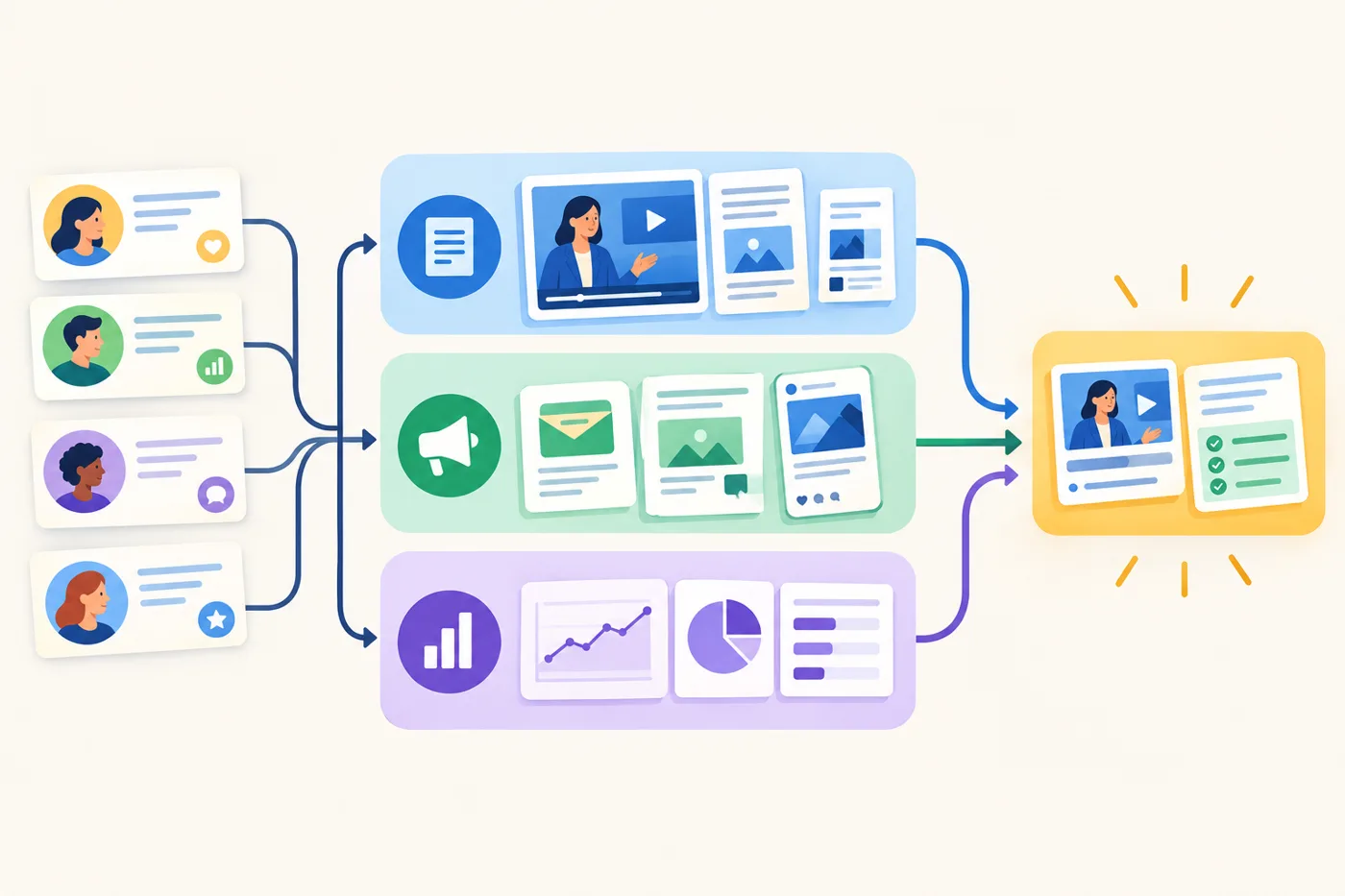
Facts and examples
Imagine a fictional webinar where a consultant says, “In a pilot with three stores, reminder emails were followed by more repeat visits, but this example cannot show that the emails caused the increase.” A clipped social post saying “Reminder emails increase repeat visits” would turn a limited observation into a causal promise.
Instead, keep a small claim record beside each excerpt: the original wording, its context, the caveat, and the formats where it will appear. Draft the article outline, email snippet, and social post from that record, not from a shortened paraphrase. Then compare each version with the transcript and replay the relevant moment when tone or surrounding discussion changes the meaning. If a format cannot carry the necessary limit, choose a narrower claim or do not use that excerpt. The practical test is whether a reader would infer more than the speaker actually said.
In practice
## Start With One Claim, Not the Whole Webinar
Do not begin by asking an AI tool to turn an hour of conversation into a complete content package. Choose one short answer that might work in more than one format; a small test makes it easier to see where the meaning shifts.
Write down the sentence you might reuse, who or what it concerns, and any limiting words such as “in this example” or “may.” If the transcript does not make those details clear, mark the excerpt for review rather than filling gaps by assumption.
## Build a Claim Record
For each candidate, record the original wording, the surrounding question, relevant audience or conditions, the caveat, and the recording timestamp. Mark it “ready to draft,” “needs recording check,” or “do not use as a claim.” These are practical workflow labels, not judgments about the speaker.
In a fictional webinar, a consultant says reminder emails were followed by more repeat visits in a pilot with three stores, but the example cannot establish cause. “Reminder emails increase repeat visits” drops both the limited setting and the caveat, turning an observation into a causal promise.
Ask an AI tool to suggest angles or excerpts from the record. Instruct it not to add causes, certainty, audiences, or results absent from the source, and to flag wording that needs context. Treat its suggestions as candidates, not a verified account.
## Adapt the Claim to Each Format
An article outline can give the claim room for its scope: what the example showed, what it did not establish, and what a reader should consider before applying it.
For email, keep the qualifier close to the claim. Make sure the subject line does not promise a stronger result than the message supports; a careful body may not undo an overstated headline.
A social post may require a narrower point. The fictional example could become: “A three-store pilot saw more repeat visits after reminder emails; it does not show the emails caused the change.” If that is too dense, share the webinar’s question or takeaway instead of making a general result claim.
## Review Where It Matters Most
Compare each draft with the claim record. Check for a question or personal observation turned into a recommendation, and for scope drift from one customer or context to all customers. Replay the recording when tone or surrounding discussion could change the meaning.
Prioritize that extra check for claims with consequential outcomes—such as money, health, or business performance—or for excerpts with ambiguous context. A straightforward, low-stakes explanation may need less review than a result that could shape a reader’s decision. If the source still leaves the point unclear, narrow it, attribute it as an observation, or leave it out.
Try the workflow on one excerpt across an outline, email, and social post. Ask a colleague what each version seems to promise. If the promise exceeds the original claim, revise before publishing.
Recap and next step
Keep the qualifier attached
Repurpose the claim, not just the sentence: preserve who or what it concerns, the conditions around it, and what it does not establish as you adapt it. If a format cannot carry the limitation that keeps the point fair, narrow the claim or leave it out; a question or explanation may be more useful than a result statement.
Try it today with one two-minute webinar excerpt. Note its original wording, context, caveat, and timestamp, then draft one post. Check whether the post promises more than the excerpt supports before publishing.