Customer Research
How Can You Recruit Customer Interviewees Without Hearing Mostly From Loyal Fans?
If longtime fans accept first, their accounts may be useful, but relying on them alone could leave newer, inactive, or uncertain customers unheard. Treat this as a risk to check, not a prediction about responses. You could test whether an AI tool can sort a limited customer list using criteria you define, then review the assignments. Usefulness depends on the tool and data; sorting does not prove representativeness. The central choice comes first: whose experience might be missing? This guide offers a practical way to make invitations more deliberate.
Facts and examples
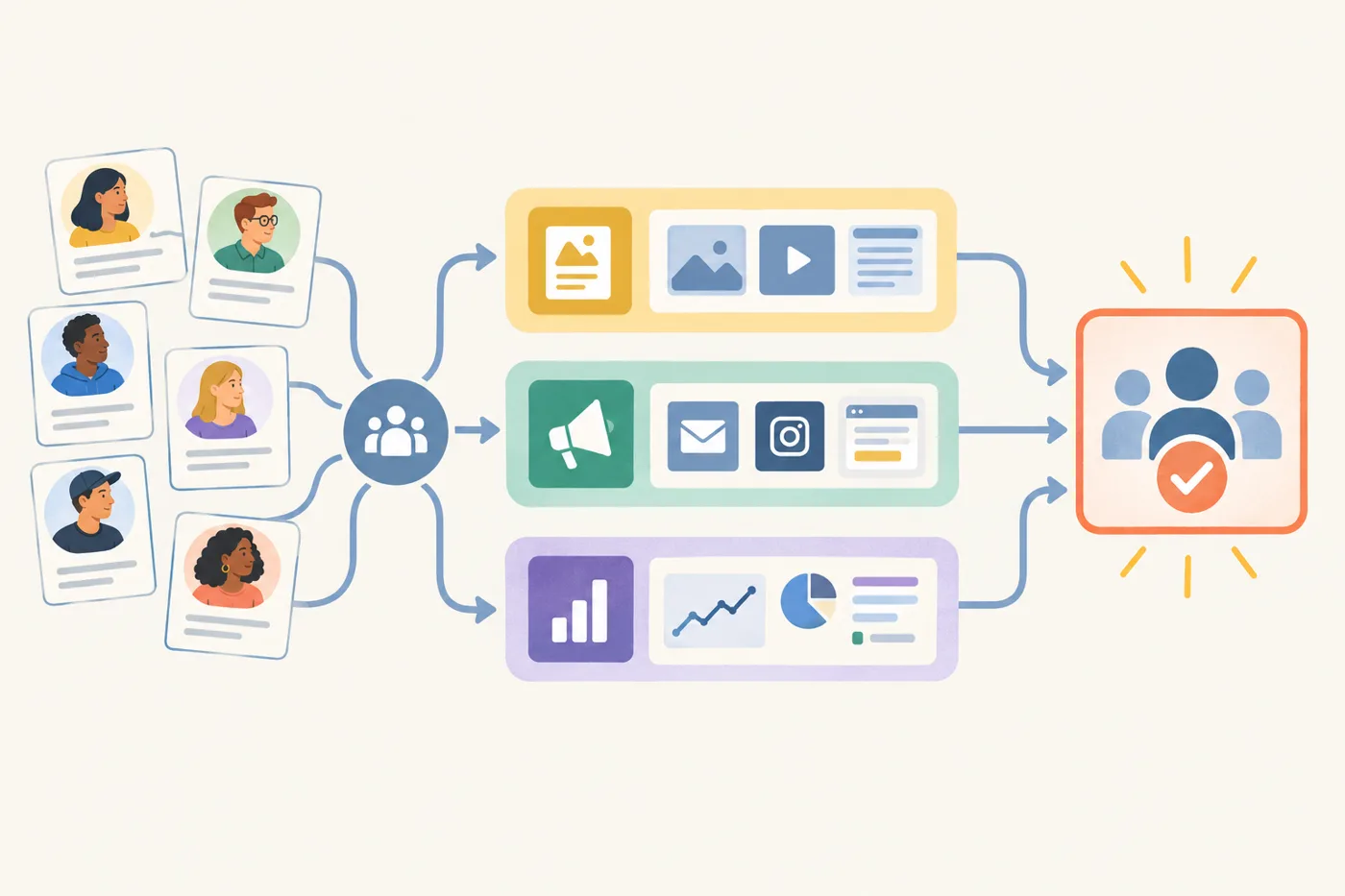
Consider a fictional subscription business with 40 interview invitations to send. Its customer list includes long-time advocates, recent buyers, people who have stopped purchasing, and customers who have not formed a clear opinion. An AI tool could sort records into those groups using information the business already holds, such as purchase recency or a voluntary feedback rating. The useful output is a recruiting plan, not a claim that the groups represent every customer. For example, if most volunteers come from long-time advocates, the marketer can invite more people from underrepresented groups before scheduling interviews. This simple scenario illustrates the key decision: use AI to notice who may be missing, then choose interviewees deliberately rather than treating the easiest respondents as the whole customer story.
In practice
## Start with the groups you need to hear from
Before asking an AI tool to sort anything, decide whose experience could change the decision you are making. If you are revising onboarding, long-time customers might explain what keeps them, while recent buyers could point to confusing first steps. People who have stopped buying or remain undecided may raise other useful questions. These are possibilities to explore, not assumptions about what any group will say.
Write down three to five recruiting groups and define each in terms your records can support: for example, “purchased in the last 30 days.” Avoid turning a behavior into a motive. Not opening an email does not, by itself, tell you why someone has not engaged. If an experience matters but you cannot identify it in your records, consider another recruitment route.
## Prepare a limited list
Select only the fields needed for those definitions, such as purchase date or product type. Remove names and email addresses before using an AI tool unless your organization has approved the tool and the data use. Do not share sensitive details merely to make sorting convenient.
If a tool you are permitted to use can perform the task, test it on a limited list. Supply the group definitions and ask it to show which field supports each assignment, while marking unclear records “uncertain.” Specify that it should not infer motivations or personality. Keep the criteria so you can compare the output with your intent; if the tool cannot follow them reliably, sort manually instead.
Review assignments from each group and all records marked uncertain. A neat table is not evidence that the categories are right. Check the underlying fields when an assignment seems surprising, and correct the criteria or record rather than accepting an inference you did not authorize. The output is a possible recruiting aid, not a judgment about customers.
## Check invitations and replies
Before inviting anyone, compare your intended groups with the usable contacts you have. Note groups that dominate the list and experiences you cannot reach through it. As replies arrive, track them by group as well as tracking invitations. It is possible for the people who respond to differ from those contacted, so a balanced invitation list alone cannot tell you whether the resulting conversations cover the experiences you wanted.
Set a modest invitation target for each group as a planning guide, not proof of representativeness. If replies cluster in one group, consider another invitation round for groups with fewer responses, where feasible. If a group remains difficult to reach, record that constraint and consider another channel or recruitment period rather than silently substituting the easiest respondents. This makes the trade-off visible without claiming that the final interviewees stand for every customer.
## Keep recruiting separate from conclusions
Use group labels to guide invitations, not to decide in advance what an interview means. Ask open questions about participants’ experiences and avoid steering them toward an expected explanation. When reviewing what you hear, note whether an idea arises across different groups or only in one. Treat interview themes as leads for further inquiry, not as a tally of the whole customer base. Keep a brief log of the definitions, adjustments, and groups you could not reach; it helps distinguish a recruiting choice from a conclusion about customers.
## Try one deliberate round
For your next project, define three groups, test a limited list using minimal data, review the assignments, and track invitations and replies by group. If the replies cluster, decide deliberately whether to adjust the next round. The test is whether this process helps you notice gaps before the easiest volunteers shape the conversation.
Recap and next step
An interviewee can offer perspective without standing in for every customer. Treat AI sorting as a workflow to test, not a guarantee: define relevant groups, use suitable data, and review assignments. Track invitations and replies by group so possible participation gaps are visible. Group targets guide recruiting; they do not establish whose experience your interviews cover.
For your next project, name three groups that could affect the decision, define each with a field you can verify, and identify a small list to review before invitations go out.